When upgrading your vehicle, home or workplace, the first practical question is usually cost. Professional window tinting in Australia is not a single flat rate. The quote depends on glass area, access, preparation and the film specified for the job.
At Dandy Tints we explain how car, home and office jobs are quoted in Sydney. Indicative automotive prices below match the matrix on our car window tinting page. Home and office work is quoted after a measure. Figures are a guide, not a guaranteed quote.
The #1 Cost Factor: Film Technology Grade
Film type is one of the largest quote variables. Dyed, carbon and ceramic films are built differently, so heat control, appearance, durability and price are not the same. Compare the specific product offered, not the category label alone.
Basic Dyed Film (Budget Tier)
- The Cost: Typically the cheapest upfront option.
- The Reality: This technology relies on a layer of pigment-dyed polyester. It can darken glass and add daytime privacy, but dyed films generally control heat less effectively than carbon or ceramic constructions. Organic dyes can fade, bubble or delaminate over time, especially in strong sun. Lifespan depends on the product and conditions.
Carbon Film (Balanced Mid-Tier)
- The Cost: An exceptionally durable, mid-range investment option.
- The Reality: Carbon films replace organic dyes with carbon particles in the laminate. They are often chosen for a stable dark appearance. Non-metallic carbon constructions are typically less likely to interfere with phones, GPS or keyless entry than older metalised films. Confirm signal behaviour for the exact product if that matters to you.
Ceramic & Nano-Ceramic Film (Premium Performance Standard)
- The Cost: The premium high-tier choice.
- The Reality: Ceramic and nano-ceramic films use non-conductive ceramic particles to manage solar energy, including infrared heat, while a range of visible-light (VLT) options remain available. Performance varies by product. Ask for the data sheet for the film being quoted, including VLT, solar performance and the written warranty. Ceramic is not automatically the right choice for every vehicle or building.
Automotive Car Window Tinting Costs
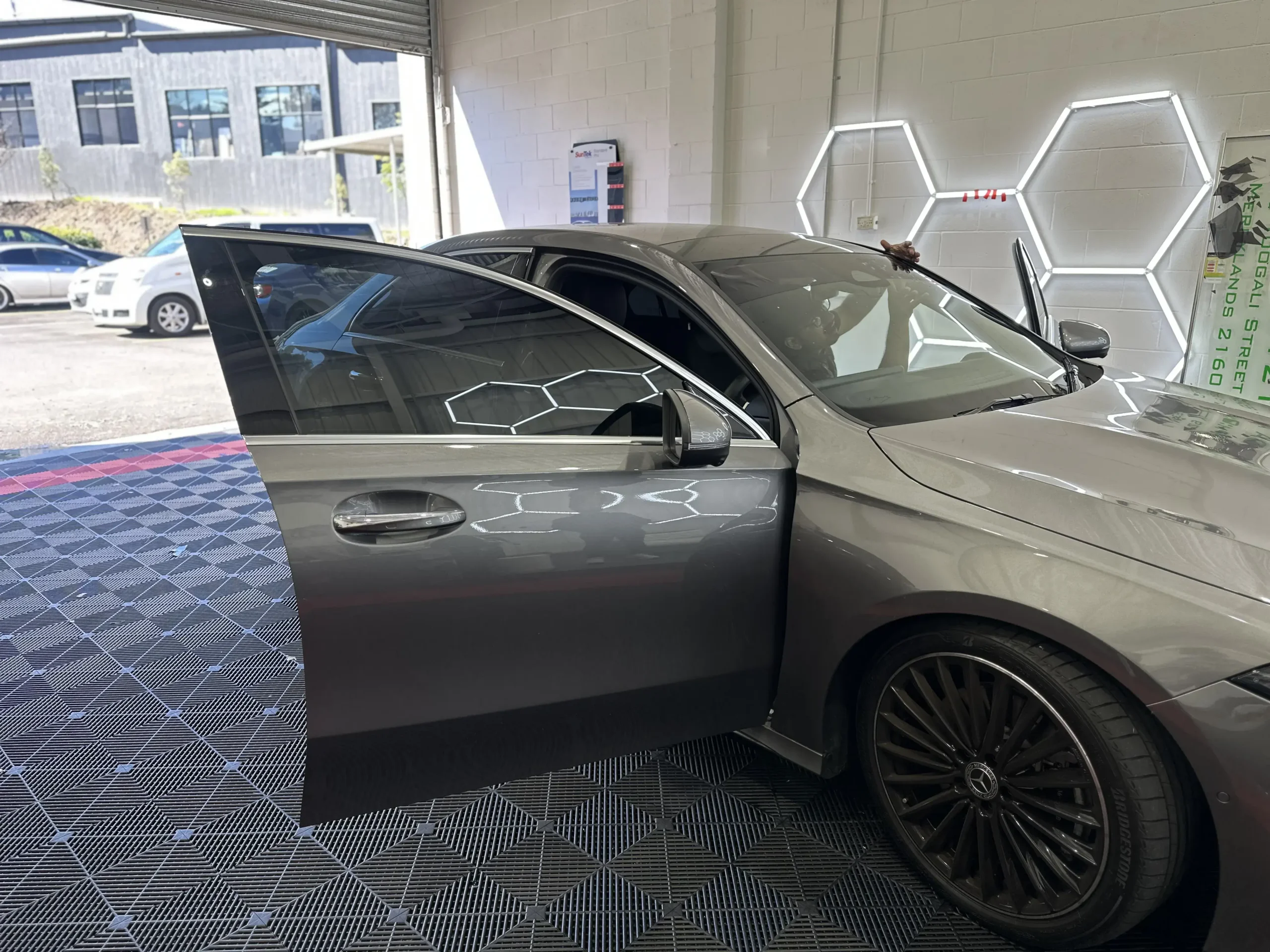
Vehicle window tinting prices vary based on the size of your car, the number of windows, and the specific film technology chosen. Larger vehicles with expanses of curved glass or complex trim configurations naturally require more labor and material.
The indicative automotive matrix below is the same source used on our car window tinting page. Confirm GST, inclusions and extra charges on the written quote.
DANDY TINTS AUTOMOTIVE PRICING MATRIX
| Vehicle Configuration | Carbon Film | Ceramic Film |
|---|---|---|
| Hatchback | $250 | $385 |
| Sedan | $280 | $395 |
| Small SUV | $285 | $399 |
| Full Size SUV | $330 | $449 |
Note: Prices are indicative and may vary with make, model, glass layout, existing-film removal and the film specified. They are not a guaranteed quote.
Critical Automotive Add-Ons & Cost Variables
- Old Tint Removal Fees: If your vehicle has old, bubbling, or degraded purple film, it must be professionally removed before a clean application can take place. Scraping and steaming away old adhesive without damaging the factory rear glass demister lines requires high-level skill and is quoted after inspecting the existing film, adhesive and demister lines, rather than as a fixed add-on.
- Windscreen rules (NSW): Aftermarket film is not permitted across the main viewing area of the windscreen. Transport for NSW inspection standards allow a tinted or opaque band at the top, above the wiper arc or the top 10% of the windscreen, whichever is greater. Check the current NSW tint-law guide before choosing film. Optional extras such as a dash cam are quoted separately.
Residential Home Window Tinting Costs
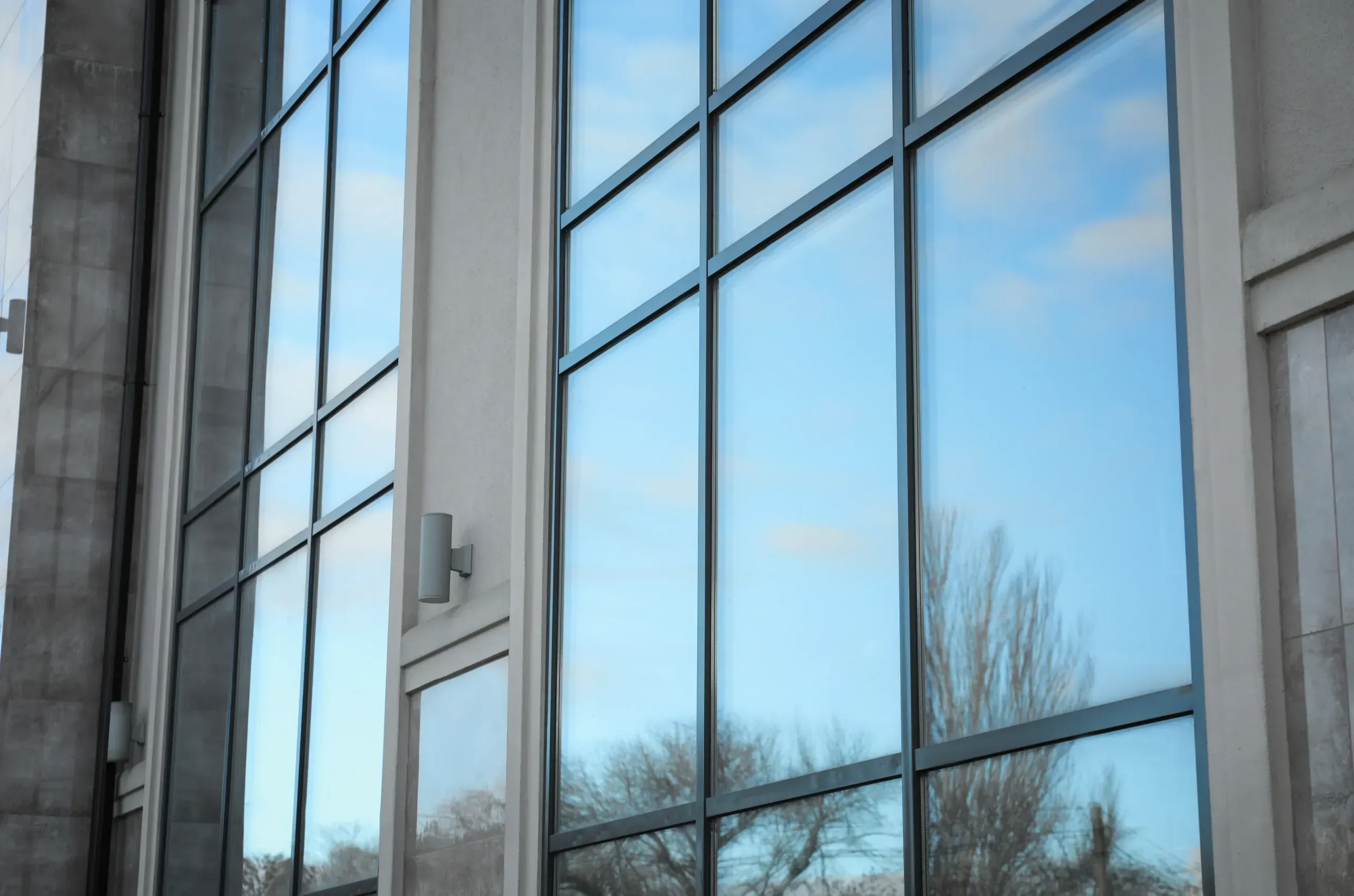
Unlike automotive tinting, which is quoted per vehicle class, residential home window tinting is quoted from measured glass area in square metres, plus film type, access, preparation and any existing-film removal.
A home quote should identify the film purpose (heat, glare, privacy, safety or decorative), the glass type, and site access. We do not publish a single per-square-metre rate here because jobs vary too widely.
- Solar / heat-reduction film: Chosen to manage heat and glare. Performance depends on the specific product and the glass it is applied to.
- Premium solar-control film: Often specified for strong western sun. Compare published solar data and the written warranty for the exact film, not a generic “lifetime” claim.
- Privacy or frosted film: Reduces through-glass visibility while still allowing daylight. Common on street-facing rooms, entries and bathrooms.
- Decorative or patterned film: Selected for appearance. Price follows design complexity and glass area.
- Safety film: A thicker laminate designed to help hold glass fragments together if the pane breaks. It is not unbreakable glass and does not prevent a determined break-in.
The Double-Glazing (IGU) Pricing & Safety Warning
Double-glazed units need a film chosen for that glass system. Some absorbing films can add thermal stress. Compatibility depends on the glazing, coatings, frames and the film manufacturer’s guidance — ceramic is not automatically required, and dyed film is not automatically unsafe. Ask the installer to record the glass type and follow the film-to-glass guidance.
Commercial Office Window Tinting Costs
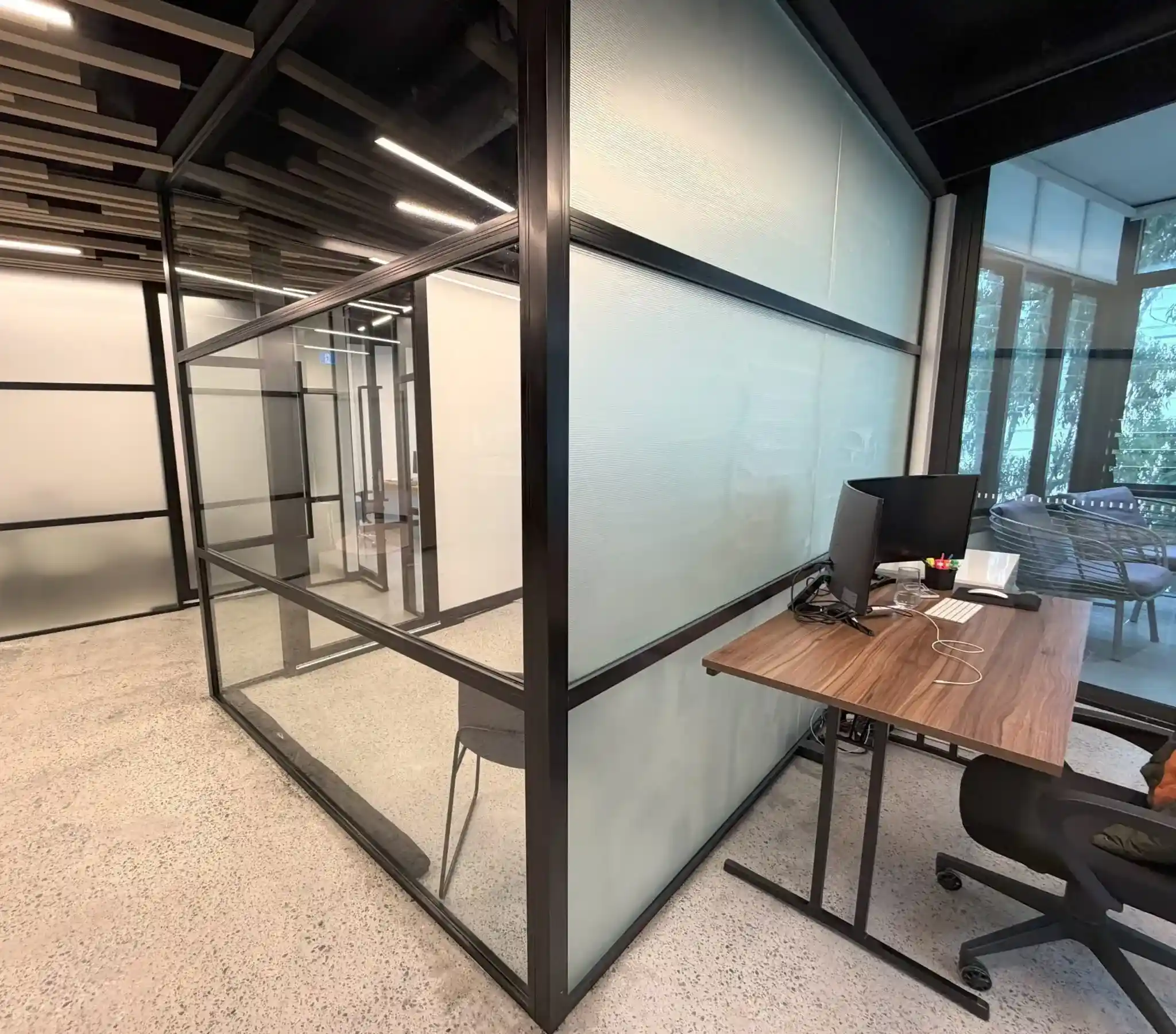
For commercial retail storefronts and corporate workspaces, pricing is traditionally scaled into per square metre (sqm) metrics to manage expansive commercial window systems. Commercial work is quoted per project from measured glass, film specification, height/access, existing-film removal and whether work must be staged or done outside business hours. We do not publish a single per-square-metre rate here because those variables change the job.
A suitable solar-control film can reduce solar heat gain and glare. Any effect on energy bills depends on glazing, orientation, HVAC, occupancy and operating hours, so it should not be treated as an automatic or immediate return on investment:
- Cooling load: Rejecting solar heat can reduce strain on air conditioning in sun-exposed zones. Measured savings need a site-specific assessment.
- Glare and comfort: Film can reduce screen glare and hot spots. Results vary with orientation, existing shading and the film selected.
- Fade reduction: Many architectural films are designed to block a high proportion of UV. Fading still depends on the materials, daylight hours and other light sources.
Technical Comparison Matrix: Specs vs. Value
| Film type | Typical role | Heat control | Colour stability | Signal notes | How we price it |
|---|---|---|---|---|---|
| Dyed | Appearance and privacy | Generally lower than carbon or ceramic | More prone to fade | Usually non-metalised | Car: quote / matrix. Home: measured m² |
| Carbon | Darker stable appearance | Mid-range, product-specific | Generally more stable than dyed | Typically non-conductive | See the car matrix on this page |
| Ceramic / nano-ceramic | Heat and glare with a chosen VLT | Often higher; check the data sheet | Generally high | Typically non-conductive | See the car matrix; buildings quoted on site |
Serving Greater Sydney suburbs and regional hubs
Bring your car to our workshop at Unit 9/20 Loyalty Road, North Rocks NSW 2151. Mobile installation can be discussed for suitable jobs across Greater Sydney. Availability depends on the vehicle, site and film.
We regularly work in suburbs including:
- Car Window Tinting Parramatta
- Car Window Tinting Blacktown
- Car Window Tinting Castle Hill
- Car Window Tinting Ryde
- The Macarthur Region: Campbelltown CBD, Leumeah, Minto, Ingleburn, and Casula.
Frequently Asked Questions
Why shouldn’t I just buy a cheap $150 DIY tint kit online?
A professional window tinting install is done in controlled conditions to reduce dust, creases and trapped debris. DIY kits often lift at the edges and usually do not include a workmanship warranty. Legal VLT is measured on the finished glass-and-film combination, not assumed from a kit label. Ask for the written warranty terms that apply to your job.
Does aftermarket automotive tint meet NSW transport compliance laws?
For most eligible NSW light vehicles, Transport for NSW publishes minimum light-transmittance requirements by window position. Front side windows typically need at least 35% VLT. Rear side windows and the rear windscreen typically need at least 20% VLT where a passenger-side rear-vision mirror is fitted; without that mirror, rear glazing may need 35%. These figures apply to the glass and film together, not the roll label alone. Film is not permitted on the remaining windscreen outside the allowed top band (above the wiper arc or the top 10%, whichever is greater). This is general information, not legal advice — see our tint percentages and laws guide.
Secure Your Upfront Pricing with Dandy Tints
Compare quotes on the same basis: film manufacturer and product, coverage, preparation, GST and written warranty. A lower total is not automatically better value.
Contact the professional specialists at Dandy Tints today to book your free on-site measurement, look over real material film samples, and receive a transparent, tailored quote.
- Phone: 0455 121 312
- Email: in**@************om.au
- Workshop Headquarters: Unit 9/20 Loyalty Road, North Rocks NSW 2151 (Open Monday to Sunday, 7 am–7 pm).
- [Book Your Free Consultation Now]